Inconvenient Truth

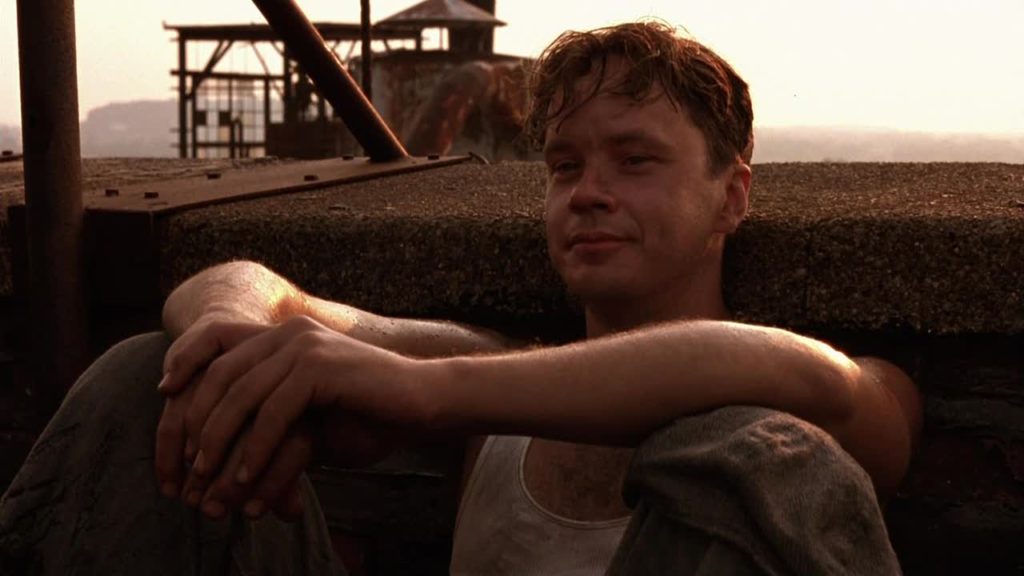
Near the start of The Shawshank Redemption Andy Dufresne is on the witness stand, losing a battle for his life he will ultimately win. The district attorney calls “inconvenient” the inability to find the gun used in the crime. Andy has used the gun to make a hole in the river, though not to make holes in his estranged wife, and the golf pro banging her into the wall. 

“Because I am innocent of this crime,” Dufresne replies. “I find it decidedly inconvenient.”

It is the truth.

And that’s all.

By which I mean the gun, it’s use or non-use, it’s location and locatability, and, most crucially for our perceived “prove it to me” approach to life, whether we receive (accept) any of that information, is irrelevant to what is. Andy knows he’s innocent. He will be perceived guilty for the next two decades.

But the truth will out.

So take faith.

Faith is faith in Christ and the faith of Christ, as we come to understand. Faith seeks understanding, and what is sought is found. And it is what it is, as the kids say.

Admittedly, there’s always work to be done, and always more work to be done.

Andy Dufresne, for example, must tunnel through rock, and walk through a quarter mile of sewer — a river of shit, Red calls it. The faithful must do similar work, in ways appropriate to it.

The faith of Christ is rarely convenient.

If ever: it tells us to stay when we want to go, to love when we want to stew, to shut up when we want to speak.

It tells us to forgive when we want to gnaw the marrow of resentment.

[Buechner says we’re eating ourselves, but golly we enjoy that meal.]

And the faith of Christ is the best way of the best man who’s ever lived.

One of CSL’s better known lines — stiff competition, that — has to do with believing in Christianity not so much because of what he sees in it but because of what he sees by what he sees.

And Chesterton who came before says the more one becomes convinced of something the less one is able to explain it. Like loving one’s wife, it is. It simply … is. How could one not see it?

Each of these lines — Lewis, Chesterton, and Andy Dufresne (by way of Stephen King and Frank Darabont) — works by way of indirection, which is crucial in communicating truth. For that matter, add Emily Dickinson: Tell it slant, she says. Not because it’s practical or impractical, effective or proactive — or even rebarbative, to some.

Do it because that’s the way it’s done.

Continue in it, whether anyone sees or not.

The power in Dufresne’s response to the DA is that if he’s guilty, the prosecutor is right — how convenient the gun can’t be found. But he’s innocent. And because that’s the truth, it is inconvenient, and for nearly 20 years.

But Dufresne continues to live in that truth and of the faith of it. The tunnel is his monument to that truth, the boat he begins to build his reminder, to himself, but (since he’s had 19 years to learn it) most of all to us.

Do it because that’s the way it’s done.

Continue in it, whether anyone sees or not.

That’s how the truth will out, as it always does.

Leave a Comment

Your email address will not be published. Required fields are marked *

Recent

Coyotes and Christians

I am not saying Christians are like coyotes. [For that, some could cut caustically to coyotes are like Christians — tricksters, roaming in the dark, feeding on the dead … ] Simply noticed — somewhat in passing, as it’s said, having attained, apparently … achieved? … some kind of state where nearly anything I hear,

Read More »

And Did Dostoevsky Say ‘Beauty Will Save’

Short answer: he did not. Neither did Prince Myshkin, that we know of. Likely both believed it. Beauty — in the person of Christ — will do so. And clearly D wrote of M in The Idiot to explore art and beauty and ugliness and salvation. But did he say it, and did he believe that

Read More »

What I Recalled Watching Netflix

[Television is educational.]   One Saying the same stuff over and over looks like you have different things to say. Two If you’re ever in a below-average film or streaming series, and you beat the tar out of a guy, in a house, and you gaze down in both some shock as also a certain

Read More »

Seeking the King

A line everywhere misattributed to Chesterton reads thus: The young man who rings the bell at the brothel is unconsciously looking for God. This line is not from the great [several senses of the word] man who recently celebrated his 150th birthday, but the mid-century most unmodern novelist Bruce Marshall. The words — which do

Read More »

Random

The End In Mind

Sometimes we imagine ourselves the star of our own personal blockbuster biopic, currently in production (it’s sometimes in development hell, but generally moving forward) and it’s all vital and crucial, Academy Award-material, two thumbs way up. God is teaching us all this stuff, we think, even if don’t presently know what it is. And if

Read More »

Once Upon A Time

Once upon a time, my children, before the Social Media Olympics, before the rub-on tan; before the laptop with no DVD drive, before the waters had begun to rise again; before the Hybrid and the Hulu, before the earbud and the Entenmann’s outlet; before there were tweets and tweakers, yea afore they had invented the

Read More »

Trilemma

Bear no malice nor ill-will to any man living, for either the man is good, or naught: if he be good, and I hate him, then am I naught; if he be naught, either he shall amend, and die good, and go to God; or abide naught, and die naught, and so be lost.  

Read More »

True Romance

Mentioned last week the Manic Pixie Dream Girl, a term used in film to refer to a female — not a woman, mark you, but a girl or perhaps female, depending on the level of [im]maturity — who exists in a story not for herself, more deeply not as a Self, but only for the

Read More »

Related

It’s Not Gonna Be Me

First thing I noticed anew this year watching It’s a Wonderful Life was how happy George Bailey was to be going to jail. He celebrates it, as he bursts through his front door to be greeted by a bank examiner, a journalist, and the sheriff. If those three “walked into a bar” it might not be

Read More »

Animal Planet Part XVII

Well we watched the end of Planet of the Apes. Oy. The 2001 version ends, as you may know, in a massive battle scene, like some simian Braveheart. Huh? This is how a Tim Burton film (almost) ends? Not with a weirdness but a boom? Then there’s the whole Lincoln Memorial (actual) end. Huh? Huh?

Read More »

Bread

“We’re sorry,” said the man, pointing. “We ain’t much here.” The woman, they guessed his wife by the way she puttered around, doing many small things but nothing really, was shaking her head. The two were indicating the table, which indeed was sparse: bread of some kind, though it looked fresh baked at least, with

Read More »

Sign Posts

The physician must be able to tell the antecedents, know the present, and foretell the future — must mediate these things, and have two special objects in view with regard to disease, namely, to do good or to do no harm. The art consists in three things — the disease, the patient, and the physician. The physician

Read More »