Animal Planet Part XVII

Planet of the Apes Movie

Well we watched the end of Planet of the Apes.

Oy.

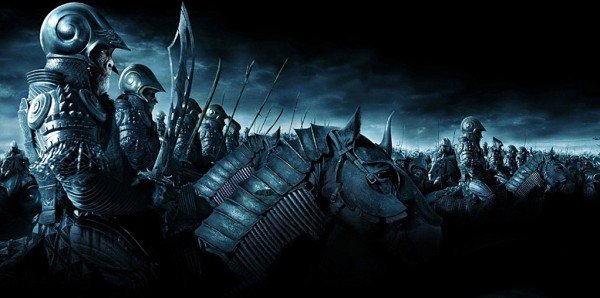
The 2001 version ends, as you may know, in a massive battle scene, like some simian Braveheart.

Huh?

This is how a Tim Burton film (almost) ends? Not with a weirdness but a boom? Then there’s the whole Lincoln Memorial (actual) end.

Huh? Huh?

But nothing could prepare us for the 2011 version, with so many demands for our disbelief that one simply … tires.

Only briefly …

That’s not how drug testing starts and stops, on a dime, with no oversight, on the say-so of one guy and his private medical laboratory …
No, you’re not allowed to own apes, and the sexy zookeeper would be aghast at this, not intrigued, or (de)panting for the perpetrator …
Five years after they start visiting that forest, more convenient than a local 7-Eleven, he tells her how Caesar came to live with him …
Earthquake proof buildings, required in California, do not have plate glass windows apes can 1) leap through and 2) unharmed …
Why would zoo apes, who had not received the drug, know immediately, intuitively what to do if the smart ones set them free …

Well, because (of course) all animals want freedom … and no doubt justice, equality, and medical marijuana.

Have these people ever even been in a jungle?

I have not, but I would bet there is precious little freedom, justice, equality, or decent dope.  In fact, that is the paramount problem with this whole modern newly enfranchised of the Planet of the Apes moviesdamned if they aren’t … exactly like humans. But if they are exactly like humans, those same humans who enslaved their simian cousins in the first place, then why should we be even remotely glad they are now free to remake the society along their lines … which would actually be very much like ours.

The original — I mean the actually original 1968 version — was a commentary on racism, not animal rights. We weren’t meant to elevate the apes but to recognize that they were playing the parts of the humans in our actual world, unfairly subjugating humans in the movie just as we were doing to an entire race (blacks) in the real world.

When you make it a denotatively pro-ape dealio from the get-go, you lose that entirely. And frankly I say this as someone who carries more than a passing notion that we have certain responsibilities as regards animals and the environment. A book from a few years back discussed this — quite well.

Unlike these atrocious movies.

Recent

Coyotes and Christians

I am not saying Christians are like coyotes. [For that, some could cut caustically to coyotes are like Christians — tricksters, roaming in the dark, feeding on the dead … ] Simply noticed — somewhat in passing, as it’s said, having attained, apparently … achieved? … some kind of state where nearly anything I hear,

Read More »

And Did Dostoevsky Say ‘Beauty Will Save’

Short answer: he did not. Neither did Prince Myshkin, that we know of. Likely both believed it. Beauty — in the person of Christ — will do so. And clearly D wrote of M in The Idiot to explore art and beauty and ugliness and salvation. But did he say it, and did he believe that

Read More »

What I Recalled Watching Netflix

[Television is educational.]   One Saying the same stuff over and over looks like you have different things to say. Two If you’re ever in a below-average film or streaming series, and you beat the tar out of a guy, in a house, and you gaze down in both some shock as also a certain

Read More »

Seeking the King

A line everywhere misattributed to Chesterton reads thus: The young man who rings the bell at the brothel is unconsciously looking for God. This line is not from the great [several senses of the word] man who recently celebrated his 150th birthday, but the mid-century most unmodern novelist Bruce Marshall. The words — which do

Read More »

Random

True Romance

Mentioned last week the Manic Pixie Dream Girl, a term used in film to refer to a female — not a woman, mark you, but a girl or perhaps female, depending on the level of [im]maturity — who exists in a story not for herself, more deeply not as a Self, but only for the

Read More »

16 Precepts

You have asked me how to pursue learning. I pass this along in response — Move from the easier to the difficult Be cautious of speech Be slower still in frequenting places of talk Embrace purity of conscience Pray without ceasing Love your home and to be there often Show geniality to all  Pay no heed to others’

Read More »

Not Free

During the Cold War there was a list of countries and their level of freedom. It still exists but we pay less attention to it.  I recall three categories — very free, free, not free — and I remember ratings were based on politics, economics, and so on. So too in man. We are very free, free,

Read More »

All Hat No Cattle

The men I respected most when I wrote about the golf business — and being the golf business they were mostly men — were course superintendents. I loved talking with them, because they more than nearly anyone else wanted to be there simply for the grass and the golfers, and in that order. And this

Read More »

Related

Sign Posts

The physician must be able to tell the antecedents, know the present, and foretell the future — must mediate these things, and have two special objects in view with regard to disease, namely, to do good or to do no harm. The art consists in three things — the disease, the patient, and the physician. The physician

Read More »

For M

The great story is the search by the lover for the beloved. I love M. I am in love with M. [angry as well; in love and in pain, simul.] To love as Christ loves. (ask, seek, knock). God pursues. Christ stands. Spirit groans. I am he. I seek her even if she will not

Read More »

Why Not Two Cupcakes?

Something we know well and another I know little. Remember … re-member … before we begin Dallas Willard on knowing — namely … named-ly … not intellectual apprehension but interactive relationship. Each and both come from the same aim: good and right and lovely when well and harmful on all counts when not, as is

Read More »

The Weighty Beauty of the IBM Selectric III

As Annie Dillard might say, I didn’t write this, I typed it. In fact, I typed it on a black 15″ IBM Selectric III — correction, a Correcting Selectric III, which began production, I am informed, in 1980. It’s the one I learned to type on and, I know now, began to learn to write.

Read More »