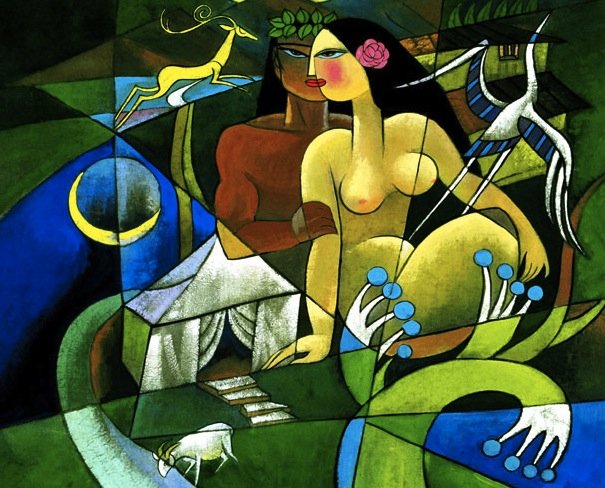
Of Love

We like lists.

Here’s one.

Love is a song
Love is the greatest song
Love is integral
Love is alive
Love is gospel
Love is power
Love is work
Love is desire and fulfillment
Love is suffering
Love is free
Love is true to reality
Love is accurate
Love is simple
Love is individual
Love is a surprise
Love is fearless
Love is exchange of selves
Love is triumphalistic
Love is natural
Love is faithful
Love is ready
Love is all-inclusive
Love is “sexist”
Love is as strong as death

The list is from Three Philosophies of Life, by Peter Kreeft. It’s the parts, each 1-2 pages long, from the book’s chapter on Life as Love. The three chapters are

Life as Vanity
Life as Suffering
Life as Love

and correspond to the wisdom literature

Ecclesiastes
Job
Song of Songs

as well as Dante

Hell
Purgatory
Heaven

among other things. One of Kreeft’s gifts is to show how ideas connect across ages and across philosophies. One of his other gifts is to write about them succinctly, confidently, and lyrically. The book is a short and awesome read.

Here is the list, as I rewrote it in short paragraph form.

Love is a song. In fact, it’s the greatest song. It is a song in dialogue, and all of its parts work together in harmony. This makes it alive, which is good news. A living thing that is good and powerful, but that requires work. There is something we want in it, and love can provide it, but it will require work, and suffering, lots of suffering. Lots of suffering. We choose this in accord with reality, and with seeing things well and rightly.

It’s not, despite the song, complicated. Simply focus on the one individual — God, M, etc. — and be so strong and brave. You will have to be courageous. The results will be a surprise (the good kind). This is true for both parties — both of the individuals — for it is an exchange of selves — God, M, etc. They are doing the same thing you are doing.

Triumph! It’s a celebration! This is where life is, and where we should be. Love must be trusted; faith is central to love, and we cannot divide ourselves in it. Love is ready to do good and right, and so must encompass everything. Love is roles, proportion, and it outlives death.

Of course all of this supposes at least a decent and reasonable understanding of love to begin with — it’s not a feeling, for instance, as it is commanded, and you can’t command a feeling. Feelings are usually one part, both prior and later, of love. But love is not, cannot be, just feeling.

And it also asserts love as how it actually is in goodness, beauty, and truth — and so, how it should be in practice. Our results may vary. And if they do, perhaps our plan is not working. Or we’re doing it wrong.

Leave a Comment

Your email address will not be published. Required fields are marked *

Recent

Coyotes and Christians

I am not saying Christians are like coyotes. [For that, some could cut caustically to coyotes are like Christians — tricksters, roaming in the dark, feeding on the dead … ] Simply noticed — somewhat in passing, as it’s said, having attained, apparently … achieved? … some kind of state where nearly anything I hear,

Read More »

And Did Dostoevsky Say ‘Beauty Will Save’

Short answer: he did not. Neither did Prince Myshkin, that we know of. Likely both believed it. Beauty — in the person of Christ — will do so. And clearly D wrote of M in The Idiot to explore art and beauty and ugliness and salvation. But did he say it, and did he believe that

Read More »

What I Recalled Watching Netflix

[Television is educational.]   One Saying the same stuff over and over looks like you have different things to say. Two If you’re ever in a below-average film or streaming series, and you beat the tar out of a guy, in a house, and you gaze down in both some shock as also a certain

Read More »

Seeking the King

A line everywhere misattributed to Chesterton reads thus: The young man who rings the bell at the brothel is unconsciously looking for God. This line is not from the great [several senses of the word] man who recently celebrated his 150th birthday, but the mid-century most unmodern novelist Bruce Marshall. The words — which do

Read More »

Random

Burning and Bleeding

Of mercy’s fire and blood Mercy burns, wrote Mary Flannery O’Connor, by which she meant … well, let’s think on it for a minute or so, before we say. For we have ideas of mercy, several actually, and we must discard them all the time, and destroy them if can, as quickly as supernaturally possible.  One

Read More »

Do Piece — Anger (Buechner)

Of the Seven Deadly Sins, anger is possibly the most fun. To lick your wounds, to smack your lips over grievances long past, to roll over your tongue the prospect of bitter confrontations still to come, to savor to the last toothsome morsel both the pain you are given and the pain you are giving

Read More »

Murder, Inc.

In Season One’s “Ransom for a Dead Man” Columbo tells a story about his cousin Ralph. He’s flying in Leslie Williams’ plane and she’s been talking about her husband, whom she’s murdered. By the story he tells after they’ve landed, he enters the murderer’s mind — with a significant stopping point: “I have this cousin, Ralph,

Read More »

Columbo: Why We Watch

This is part one of a two-part post on why, some 45 years later, we still watch Columbo. Part two is here. This essay is excerpted from The Columbo Case Files: Season One, found here. Thank you. * For my wedding, I asked for and received the Columbo DVD collection. Complete to that point, it ended

Read More »

Related

Why Not Two Cupcakes?

Something we know well and another I know little. Remember … re-member … before we begin Dallas Willard on knowing — namely … named-ly … not intellectual apprehension but interactive relationship. Each and both come from the same aim: good and right and lovely when well and harmful on all counts when not, as is

Read More »

All You Can Eat Adultery

I get all the adultery I want. It’s true. Ask Michele. Thing is, I don’t want any. You may have guessed this, but others may have thought Wha — ? Aye, and there is the (naked back) rub. I don’t want any adultery because I love my wife. This is true, and it’s the main,

Read More »

Columbo: Why It Matters

This is part two of a two-part post on why, some 45 years later, Columbo still matters. Part one is here. This essay is excerpted from The Columbo Case Files: Season One, found here. Thank you. * I now have the entire collection, all 35 years, nearly 70 episodes in all, and I’ve seen each

Read More »

On (Not) Using Words

Preach the gospel at all times. If necessary, use words. Quick now — who said that? Me. Just now. Weren’t you paying attention? The saying is sometimes attributed to Francis of Assisi, most likely erroneously, as many are gleefully wont to revel in and reveal, should someone dare voice the view. To which the only

Read More »