Being That Guy

Once after one of my MFA professors had said the work we were reading was neither good nor original, the student who’d produced the pages wailed, But … but this actually happened!

So what? He said.

*

I think François Truffaut said everyone in fiction is crazy, and the problem is to render this craziness interesting. This is too romanticized to cover most cases, especially in early semester MFA programs.

The bigger problem is everyone in fiction is normal, and the problem is to render that interesting.

*

Because how hard is it to render craziness interesting?

Well, OK, it turns out it’s a little hard. One way to say it is, craziness is now so common that few people notice it. I was talking with M the other day about memes and the news and viral videos and how no one is much surprised if some one of those items turns out to be complete hash.

So what? They said.

We expect it, and don’t really care one way or the other, ‘cuz all we want is a little diversion from whatever we’re pretending to do.

That might be the real disconnection of technology: we’re not really doing it at all.

*

I think how this affects writers is we don’t want to be that guy.

We have a thinking problem, and we don’t want to disconnect, and we want to stop pretending and we don’t want to stop doing what we’re made to do, and of course it’s not confined to writers, though it often has the appearance of being confined to certain categories of people — artists in general, philosophers, and so on.

Humanities now seems a quaint word, one that we’re constantly assured is on its way out any dang day now, forgetting the word humanities seems likely related to human and the day we don’t need that anymore is when we lock up the joint and melt the key down into our last dime so we can phone God and tell him we quit.

*

The truth is, we’re all normal.

Gloriously.

Sadly.

*

I started thinking about this from this article, a review of a book on writers and drinking.

It’s a good article and sounds like a good book and it’s a very old story — the one about the writer who drinks. They’re not writers with a drinking problem, it’s said; they’re drinkers with a writing problem.

Like the craziness idea, the writer-drinker is also romanticized. Few realize the alcoholism is not a cosmic necessity of artists: rather, it hinders them, just as alcoholism does any activity, except drinking.

Just as any addiction does, though we see few articles on artists addicted to food. To be fair there are accounts of drug addiction, and we even find an occasional item on writers who were so angry or poets so depressed they often couldn’t save their lives let alone their marriages and other relationships.

*

And plenty of creation has been stifled by addictions to entertainment — television, the massive CD and DVD collections we amassed, televised sports, cooking channels that keep you out of the kitchen, nature channels that substitute even for going to the park …

*

There is some disagreement about whether Faulkner drank while writing.

This suggests he did it at least sometimes; this asserts he did it rarely.

Those aren’t exactly opposites of course.

*

I remember reading he ruthlessly separated the two. He liked whiskey and he had to write, and far from causal, they did not overlap.

*

If everyone is flawed and most will say we are …

And if thinking inheres in being human …

Then we’re all going to be Houston.

We’re going to have a problem.

*

We want things awesome — we want to think, imagine, conceive, create, make, build, grow.

And when we don’t, and eventually can’t, we dull the pain of not doing this with … anything.

*
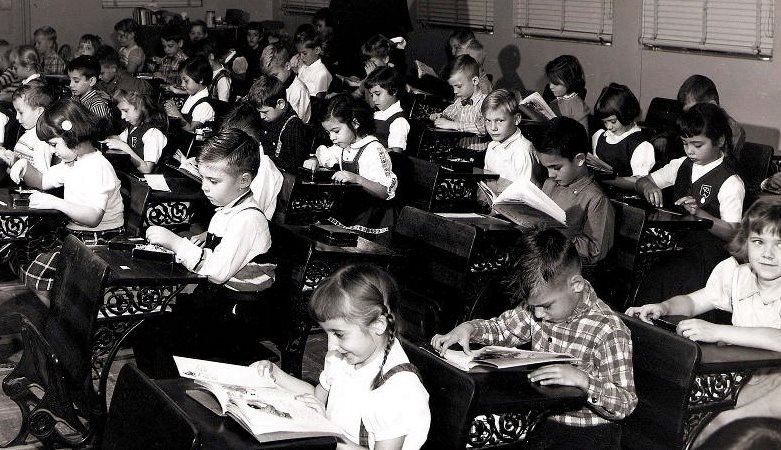
Be this kid

It’s hard to be this kid.

But it’s harder not to.

*

Yet we continue to confine this creating problem to writers — and then go a step farther and excuse it in them because, after all, They do this … ooh, l’amour … romantic thing and, you know, the alcohol is part of that life; Whattya gonna do?

*

But this is exactly backwards.

Writing is how he works out his daemon well, and drinking is how he does not.

*

It can be thus for all, because we’re all like that.

When we do what we were made to do, it is well.

When we do not, when we flee, when we drink, it isn’t.


Leave a Comment

Your email address will not be published. Required fields are marked *

Recent

Coyotes and Christians

I am not saying Christians are like coyotes. [For that, some could cut caustically to coyotes are like Christians — tricksters, roaming in the dark, feeding on the dead … ] Simply noticed — somewhat in passing, as it’s said, having attained, apparently … achieved? … some kind of state where nearly anything I hear,

Read More »

And Did Dostoevsky Say ‘Beauty Will Save’

Short answer: he did not. Neither did Prince Myshkin, that we know of. Likely both believed it. Beauty — in the person of Christ — will do so. And clearly D wrote of M in The Idiot to explore art and beauty and ugliness and salvation. But did he say it, and did he believe that

Read More »

What I Recalled Watching Netflix

[Television is educational.]   One Saying the same stuff over and over looks like you have different things to say. Two If you’re ever in a below-average film or streaming series, and you beat the tar out of a guy, in a house, and you gaze down in both some shock as also a certain

Read More »

Seeking the King

A line everywhere misattributed to Chesterton reads thus: The young man who rings the bell at the brothel is unconsciously looking for God. This line is not from the great [several senses of the word] man who recently celebrated his 150th birthday, but the mid-century most unmodern novelist Bruce Marshall. The words — which do

Read More »

Random

I Wish I Had Written This Post

If you could do it, I suppose, it would be a good idea to live your life in a straight line — starting, say, in the Dark Wood of Error, and proceeding by logical steps through Hell and Purgatory and into Heaven. Or you could take the King’s Highway past the appropriately named dangers, toils,

Read More »

Columbo: Why It Matters

This is part two of a two-part post on why, some 45 years later, Columbo still matters. Part one is here. This essay is excerpted from The Columbo Case Files: Season One, found here. Thank you. * I now have the entire collection, all 35 years, nearly 70 episodes in all, and I’ve seen each

Read More »

Whither Tebow?

So the question now is whether the future holds a place for Tim Tebow in the NFL. Well my goodness they didn’t think he belonged there before Peyton Manning signed with the Broncos … so who cares what they say now? When he was succeeding, they said he shouldn’t be. He just shouldn’t. Why not?

Read More »

Greater Love Blah Blah Blah

Do we doubt locals thanked them for their service? I’m not equating the two. They were wrong; glad we crushed them. Only noting it’s likely they thought as much about such things as we do, which is to say not much. German citizens who believed their leaders, loved their country, watched their sons get on

Read More »

Related

Animal Planet Part XVII

Well we watched the end of Planet of the Apes. Oy. The 2001 version ends, as you may know, in a massive battle scene, like some simian Braveheart. Huh? This is how a Tim Burton film (almost) ends? Not with a weirdness but a boom? Then there’s the whole Lincoln Memorial (actual) end. Huh? Huh?

Read More »

Animal Planet

We’re watching Planet of the Apes. No, not the Charlton Heston one — this one. Only it’s supposed to be this one, from last year. So we’re on the middle one, the “first remake” (excluding the 17 sequels to the Charlton Heston one) and it’s by Tim Burton, with all that that entails, from Helena

Read More »

Drinking the Seth Godin … Milk

Motivator Manipulator Maven Which is he? I’m going with maven. Maven may be one of those words we’ve lost sight of, like integrity. Integrity means “wholeness” but we’ve reduced it to “honesty.” So too maven — which means “connoisseur” — has been ironicized, demeaned really, into something like “one who condescends” referring to someone looking

Read More »

Why Not Two Cupcakes?

Something we know well and another I know little. Remember … re-member … before we begin Dallas Willard on knowing — namely … named-ly … not intellectual apprehension but interactive relationship. Each and both come from the same aim: good and right and lovely when well and harmful on all counts when not, as is

Read More »